Monday, December 12, 2016

Feature Blogger Question (El Laberinto del Fauno)


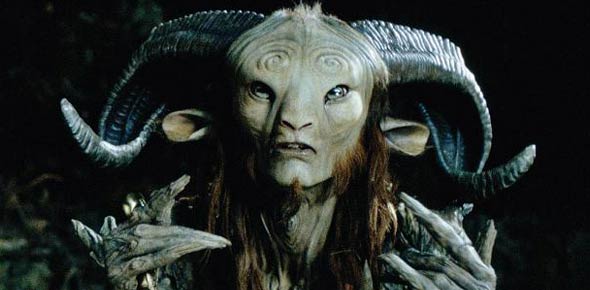
Pan's Labyrinth  is an ambiguous film. Many people would say that Ofelia's fantastic perspective was real. But some of us are a 100% that Ofelia had a creative way to cope with the harsh reality. There are several instances in the film where the audience can see that Ofelia is imagining her version full with fantasy. The part where General Vidal is seeing Ofelia talking with Pan is the biggest revelation! My question is:

Do you think that Pan's world exists only in Ofelia's mind?

My answer is: Yes. If you don't believe me, take a look at my evidence:


Don't you think that the Fallopian Tubes resemble Pan's horns? Ofelia is coping with her mother's pregnancy. Hey! But this is just my opinion. What's yours?


Blog #6: Music from Agora


I am a huge fan of the Italian composer Dario Marianelli. His film scores have been nominated by Academy Awards for Pride & Prejudice, Atonement, and Anna Karenina (all Joe Wright's films). It was in Atonement that he won the Oscar for Best Original Score. In Agora, it was no exception. Marianelli's uniqueness enhanced the drama in the film. The whole soundtrack is marvelous! But the ending scene is the most emotional. I've never thought that Alejandro Amenabar (Tesis, The Others, Mar Adentro) and Dario Marianelli would make a great team. 

If you are loking for a beautiful soundtrack (Dario Marianelli), a great cast (Rachel Weisz, Oscar Isaac, Max Minghella), a fantastic direction (Alejandro Amenabar), a controversial theme (religion, feminism) and a great art direction, watch Agora.

*Note: There is a minor whitewashing. You'll see as soon as you watch the film!

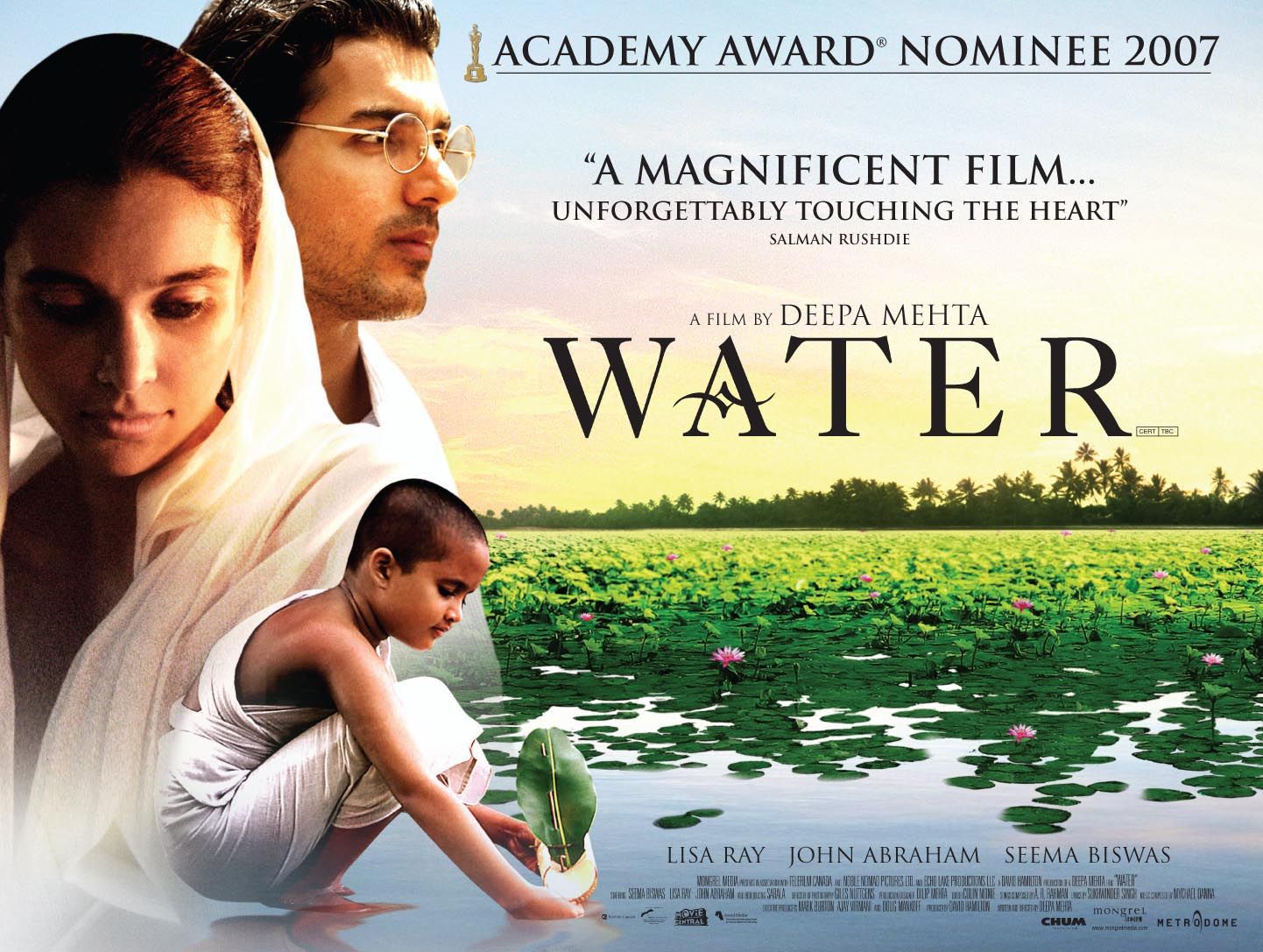
Blog #6: A Different Culture (Water)


I was 16 years old when I saw Water for the first time. I blamed my mother, because I was traumatized for a week. Chuyia's childhood was unexpected for me (it was the first Indian film that I saw). I didn't know the cultural differences between Mexico and India. Child marriage! Sati! Suicide! Child abuse! No wonder why I was mad at my mother. But I enjoyed the technical elements of the film, such as soundtrack, cinematography, and art direction. I don't regret watching Water at that age. I realized that I am lucky to have the life that I have. In some countries, people don't have a proper way of life.

Sunday, December 11, 2016

Blog #5: Special Effects from Tokyo!

If you have seen Eternal Sunshine of the Spotless Mind, The Science of the Sleep, and Be Kind Rewind, you probably noticed the visual effects that Michel Gondry used. He is not a big fan of CGI. He thinks himself as an illusionist (not the GOB type though). If you don't believe me, check this out!


This scene is from the film Tokyo! It was disturbing the first time I saw his short film. I was thinking: how did Gondry do it? I've never found my answer, because there is no video explaining how he did it. There is an interview about his short film Interior Design, but it is in French. Please, check his films! He is an old school filmmaker.

Blog #5: Emotional Music (Tsotsi)


As soon as I start watching Tsotsi, I couldn't stop thinking about Slumdog Millinaire. Both films have similar elements: tough childhoods, male characters, poverty, and music. The music in Slumdod Millionaire is fantastic! A. R. Rahman knows how to please our ears. I was surprised that Tsotsi and Slumdog Millionaire has almost the same opening scene. I couldn't find the opening scene of Slumdog Millionaire on Youtube, but if you own the movie, please check it out!


In Tsotsi, I couldn't stop crying when Tsotsi find redeems himself by returning the baby to the parents. The song is beautiful! It definitely adds emotion to the scene. There is no dialogue, just music. What a powerful scene indeed. Despite the fact that the film has many songs, the one that has no lyrics are the ones that I love the most. The whole soundtrack represents South Africa. 

Sunday, November 13, 2016

Part 1: Paikea & Mulan


"And he came on the back of a whale. A man to lead a new people. Our ancestor, Paikea. But now we were waiting for the firstborn of the new generation, for the descendant of the whale rider. For the boy who would be chief"
- Paikea, The Whale Rider


Whale Rider is a film that kind of breaks gender stereotypes. In the film,  the  Maori tribe is waiting for the boy who will become their leader. Unfortunately, for them, Pai is a girl and she won't be accepted in her tribe. There is patriarchy in her tribe, and Pai's grandfather doesn't accept her. As a viewer, take the side of Pai, because I am a woman in society where there is still patriarchy. Pai is a strong female character who is willing to be the leader of her tribe, but her grandfather  denies her. Pai is very persistent, a true example for us, women. 

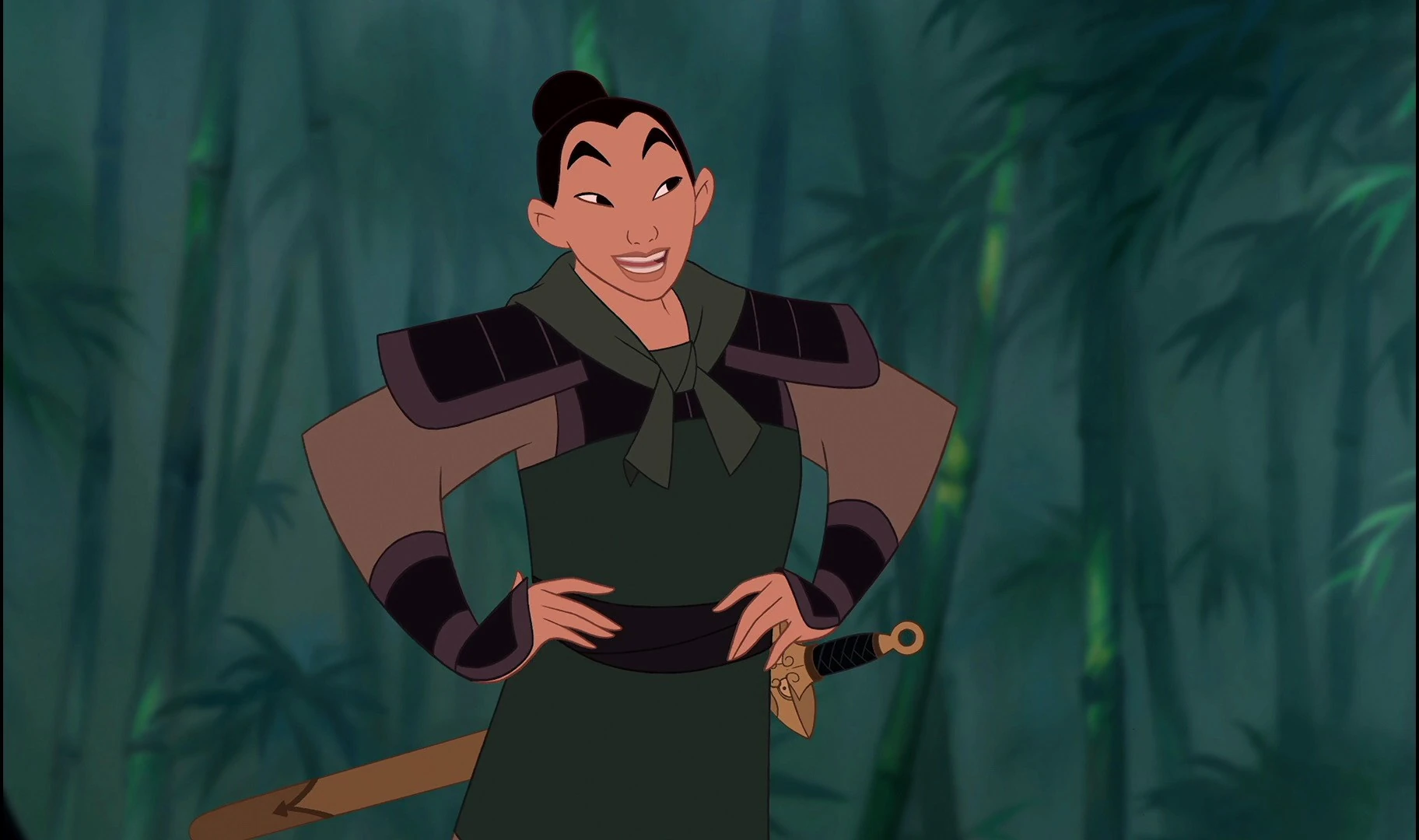
In a way, Pai and Mulan have so much in common: they fulfilled a role meant to be fulfilled only by men. These two characters are passionate, persistent, and strong. They both broke gender role stereotypes, which is something that we, women, need nowadays. In both stories, the character's own cultures are patriarchal. Coincidence? No, I don't think so. Once in a while, there are a couple of films that depict strong female characters. For instance, Imperator Furiosa from Mad Max: Fury Road came by surprise. Women were extremely happy that Furiosa and Max were equals. But some men were not so welcoming to the fact that a woman could be strong and smart. 

It is incredible that, nowadays, there are feminist, or gender egalitarian films that show children that women and men are equals. Mulan and Whale Rider are excellent examples for children; these two films taught me, after all, that women have the ability to be leaders and  warriors.  Pai and Mulan will stay forever with me. And I am positive that I will show these two films to my children.

Blog #3: Paikea: A Progressive Character in a Traditional Society (The Whale Rider)


"And he came on the back of a whale. A man to lead a new people. Our ancestor, Paikea. But now we were waiting for the firstborn of the new generation, for the descendant of the whale rider. For the boy who would be chief"
- Paikea, The Whale Rider


Whale Rider is a film that kind of breaks gender stereotypes. In the film,  the  Maori tribe is waiting for the boy who will become their leader. Unfortunately, for them, Pai is a girl and she won't be accepted in her tribe. There is patriarchy in her tribe, and Pai's grandfather doesn't accept her. As a viewer, take the side of Pai, because I am a woman in society where there is still patriarchy. Pai is a strong female character who is willing to be the leader of her tribe, but her grandfather  denies her. Pai is very persistent, a true example for us, women. 

In a way, Pai and Mulan have so much in common: they fulfilled a role meant to be fulfilled only by men. These two characters are passionate, persistent, and strong. They both broke gender role stereotypes, which is something that we, women, need nowadays. In both stories, the character's own cultures are patriarchal. Coincidence? No, I don't think so. Once in a while, there are a couple of films that depict strong female characters. For instance, Imperator Furiosa from Mad Max: Fury Road came by surprise. Women were extremely happy that Furiosa and Max were equals. But some men were not so welcoming to the fact that a woman could be strong and smart. 

It is incredible that, nowadays, there are feminist, or gender egalitarian films that show children that women and men are equals. Mulan and Whale Rider are excellent examples for children; these two films taught me, after all, that women have the ability to be leaders and  warriors.  Pai and Mulan will stay forever with me. And I am positive that I will show these two films to my children.